

School district 101 nurse Ashley Martinez sent a letter to parents this week to let them know there are confirmed cases of measles in neighboring counties and to be alert to the potential for cases in Boundary County.
“We want all our students, staff, and fellow community members to be safe and healthy,” she wrote. “We will monitor the potential risk to our students and staff and work with our local medical community to help guide us as we communicate with you.”
Multiple cases of measles have been reported in Idaho this summer, including two cases in North Idaho in Bonner and Kootenai counties. The cases are not linked to international travel and may be sign of a larger outbreak ahead in the state.
“Without any link between these two confirmed cases in north Idaho or travel outside of their communities, it’s reasonable to suspect that there is more measles circulating,” said Dr. Christine Hahn, state epidemiologist and Division of Public Health medical director at DHW. “As we’ve seen with other states around the nation, cases can begin to multiply quickly.”
“The last time the U.S. saw more measles cases was in 1992, eight years before the disease was declared eliminated in the country,” the CDC reported July 9.
Two doses of MMR vaccine are 97-percent effective at preventing measles, one dose is 93 percent effective. It is uncommon for someone fully vaccinated to develop measles, though breakthrough infections, when someone becomes infected after they have been vaccinated, can occur, especially in communities experiencing an outbreak where high levels of measles virus are circulating.
According to the CDC, as of August 26, a total of 1,408 confirmed measles cases were reported by 43 U.S. jurisdictions: Alabama, Alaska, Arkansas, Arizona, California, Colorado, Florida, Georgia, Hawaii, Idaho, Illinois, Indiana, Iowa, Kansas, Kentucky, Louisiana, Maryland, Michigan, Minnesota, Missouri, Montana, Nebraska, New Jersey, New Mexico, New York City, New York State, North Carolina, North Dakota, Ohio, Oklahoma, Oregon, Pennsylvania, Rhode Island, South Carolina, South Dakota, Tennessee, Texas, Utah, Vermont, Virginia, Washington, Wisconsin and Wyoming.
There have been 35 outbreaks reported so far in 2025, and 86 percent of confirmed cases (1,214 of 1,408) are outbreak-associated. For comparison, 16 outbreaks were reported during 2024 and 69 percent of cases (198 of 285) were outbreak-associated.
“Measles is a very contagious sickness that spreads easily from person to person,” Martinez wrote. “It can spread when someone coughs or sneezes. The first signs of measles usually appear about one to two weeks after a person is exposed. They can feel like a bad cold.”
The symptoms are:
- A high fever
- Coughing
- A runny nose
- Red, watery eyes
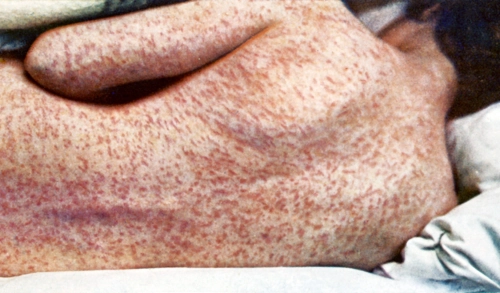
- A red rash that shows up a few days later, starting on the face and then spreading down the body.
What you should do:
- Keep a close eye on your child(ren) for any of the symptoms listed above; and
- If your child has a fever and a rash, keep them home from school. Call your doctor right away and let them know that you suspect measles. It is important to call ahead before you go to the doctor’s office.
“We will send out more information if we have any updates,” Martinez wrote. “Thank you for helping us keep our school community safe and healthy.”